
When Monks Built Civilisation
The quiet revolution that shaped England more than any king

This essay is part of a series exploring Britain and its Christian inheritance – the ideas, institutions, and beliefs that helped shape these islands.
We tend to think civilisation is built by power – kings, armies, or governments. But England was not built that way.
It was built in silence and prayer – by men who never fought a battle, never wore a crown, and never sought power at all.
These are the monks that shaped England, and today we recover their story.
If you’re interested in the hidden forces that shaped Britain—not just kings and battles, but ideas, institutions, and faith—consider subscribing below.
Hello,
And welcome back to The Case For More. Last week we saw how Bede was foundational to the idea that would become England. Before Alfred or Athelstan envisioned a unified England, Bede had coined ‘English’, as the new term for the ‘people of Angle Land’. Today, we are going to look at a broader expanse of time as we consider how vital monasteries were to the building of England – its learning, laws, and culture.
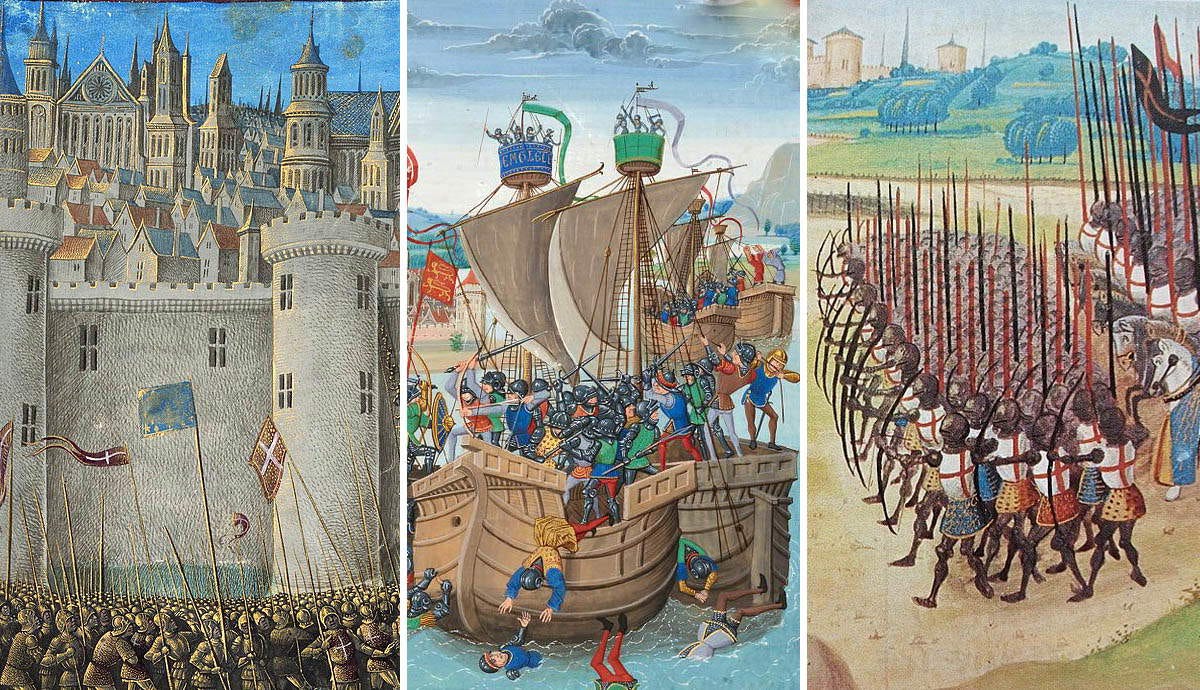
Spiritual or temporal power?
Because history is often written by the victors, we can be fooled into thinking that the course of history is dictated by monarchs, aristocrats, battles, and political forces. But this isn’t entirely the case – not even half of it.
Whilst monarchs, battles, and politics play an important role (as we will see next week) their influence on culture is often minimal compared to that of other forces such as religion. A king may conquer a land by himself, but he cannot be the sole arbiter of its culture and traditions.
Culture is built where education, religion, and community meet, not by power alone. So, if you want to understand a civilisation, you don’t start with its kings, but with its institutions.
Enter England’s monasteries
It is hard to overstate how important monasteries were to the founding of England.
In a time when most people no longer see monks or nuns in their communities, nor have never met those living in religious life, imagining a time when monastic houses were the heart and cultural centre of a town is difficult.
Whilst monasteries were primarily places of spiritual devotion, where people chose a celibate life of devotion to God, they were so much more.
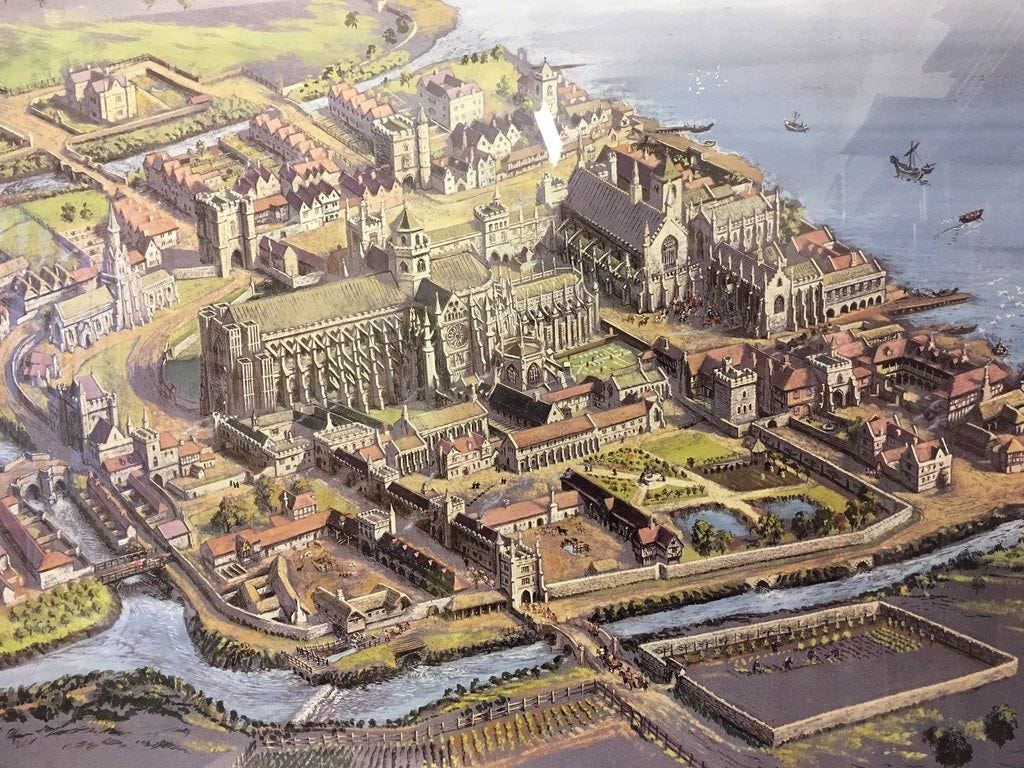
For starters, monastic houses were often attached to the main (or one of the main) churches or cathedrals in a town/city. People would hear the monks daily as they sang the litany of the hours, prayers, and mass. Also, whilst there were many closed religious houses, plenty more were involved in their communities and had local public masses in their chapels.
Learning, charity, medicine, and order
Many of the world’s oldest schools and universities, particularly in Britain, were once monasteries. Winchester, Thetford, York, Canterbury, Oxford and Cambridge universities; all of these institutions, which are some of the oldest in the world, can trace their origins back to monasteries. These places, and countless more, became the intellectual powerhouses of our nation that would go on to produce some of the greatest minds in human history.
How? Why?
Well monks were the photocopiers of their day, and as such, were able to read and write, making them among the most learned people in the land.
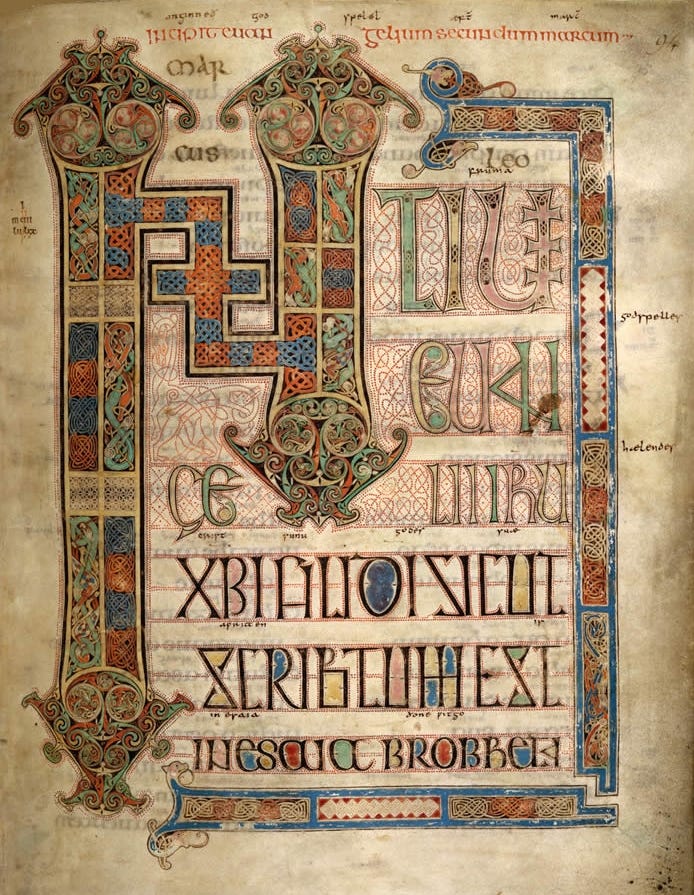
In the scriptoriums, monks would copy out texts (religious and secular) by hand so that they were preserved. Many monasteries, such as York, or Bede’s at Wearmouth-Jarrow, became home to massive libraries, and along with them, a lot of literate monks with time to read and learn.
Monks became the teachers of their day, with many wealthy families having their boys educated in monastic houses. At a time when few people could read, let alone compose new works, monasteries stood out as places of profound thinking and learning.
Because of their devotion abilities, monks also often became responsible for record keeping – writing up laws, contracts, and histories. They preserved classical works from the Greco-Roman world and advised kings, often writing down their actions and words for posterity in the process.
However, we shouldn’t think of monasteries as merely a sort of church school, they were the centre of civilisation. They not only recorded and preserved its foundations, they were also responsible for progress in law, recording current events, and pushing the boundaries of knowledge – all whilst living spiritual, and often austere lives.
But the place of monasteries in shaping England does not stop there.
Monasteries were also centres of charity. This came in multiple forms, but the most obvious were provisions for the poor, sick, and pilgrims.
The first hospitals in England were within monastery walls. Monastery hospitals often had sick bays, their own cloisters, and their own chapel. These early hospitals not only provided medical care for the monks, but for the local community too, making them vital to people in the surrounding areas.
What is more, these hospitals, although literally medieval by our standards today, were on the cutting edge of medical science at the time. They tested new medical theories, treatments, and cures. And although many of these seem bizarre by today’s standards, they paved the way for modern medicine, biology, and anatomy. St Bartholomew’s in London, for example, is one such institution that can traces its origins as a hospital back to 1123.
But where there is influence, there is always the opportunity for power and corruption.
If this has changed how you see history – even slightly – tap the like button. It helps more people see that civilisation isn’t built the way we’re often told.
The royal connection
We would be naïve to think that, although many monasteries were austere, spiritual, charitable, and communal places, there weren’t also more corrupt forms of behaviour that influenced the building of England.
Many monastic houses were run by minor royals or second-children of noble families. With monasteries came tremendous amounts of land, and with that, power, so it was a desirable place for a noble child with no chance of inheriting lands.
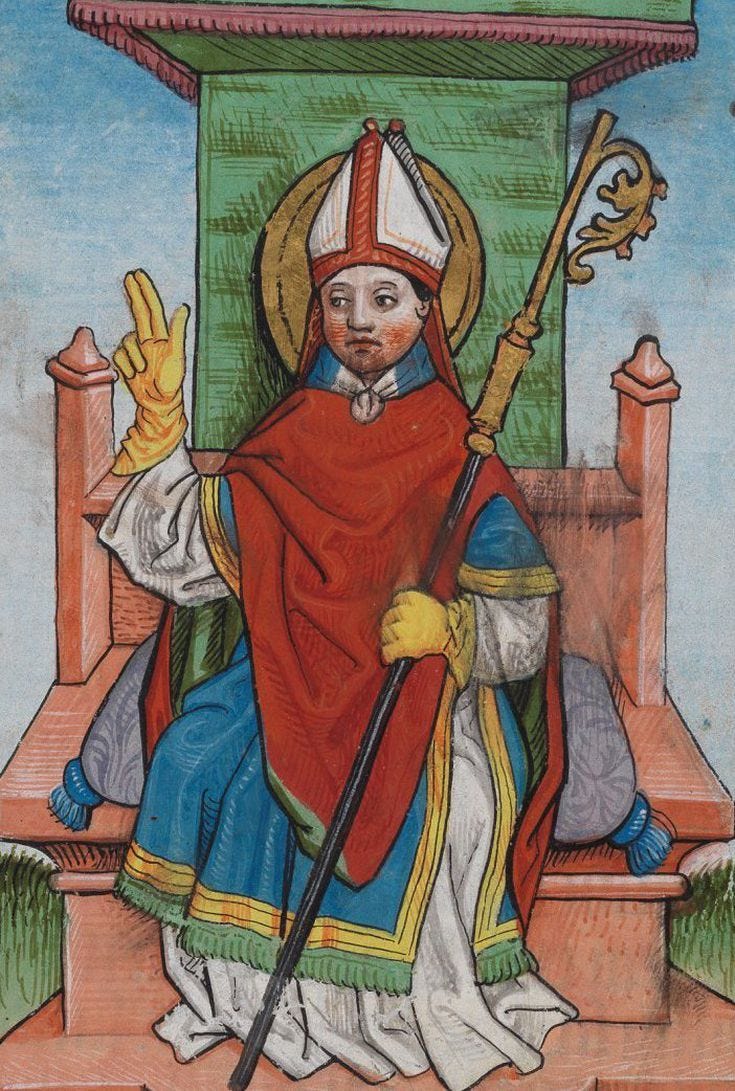
Whilst not always used for evil, monks, priests, and especially bishops, could hold tremendous sway over political powers by family ties, the strength of their character and authority, or simply the sheer amount of land they held. This naturally led to plenty of examples of corruption and nepotism.
But spiritual authority could be used positively however; to give voice to the poor, prevent war, and encourage justice.
The influence of monks on law can be seen perhaps most clearly in England where, with the likes of Magna Carta, we can see Christian influences and principles shining through in some of the most advanced and just legal documents of their respective ages. None of this is to pretend monasteries were perfect – they weren’t – but even in their failures, they built far more than they destroyed.
This raises an interesting question:
Do you think institutions like this tend to elevate society – or inevitably become corrupted over time?
I’d be very interested to hear your thoughts in the comments.
The Christian elements
Unfortunately, there are many historians today who chose to view these monastic ventures through the lens of materialism. They may arrive at the conclusion that monastic houses were primarily about power and land.
Others may take a more secular humanist approach and appreciate that monastic houses were centres of charity and learning, but think that this was solely out a love of humanity, rather than anything spiritual.
However, to ignore that Christianity genuinely played the primary role in the monastic influence on the founding of England, is to ignore one of the keys to unlocking what made England – and for that matter much of Western Europe – so successful. It is no mistake that where we see the arrival of medieval style monasteries, we see a wellspring of learning, knowledge, science, and justice – if only initially in seedling form.
Monasteries modelled, often imperfectly, the life that the community should have been striving for. They modelled and held the wisdom, traditions, and learning of centuries within their walls, and shared it with those outside.
In time, these monasteries became the schools, universities, hospitals, and centres of law that we in modern England take for granted.
If you’re enjoying this series on Britain’s Christian inheritance, make sure you’re subscribed – next week we’ll look at how kings interacted with these institutions, and the results weren’t always what you might expect
.Monasteries today
Sadly, there are very few monasteries in England today compared to the hundreds of the high middle-ages. Many have never met or seen a monk, let alone spent any significant time with one.
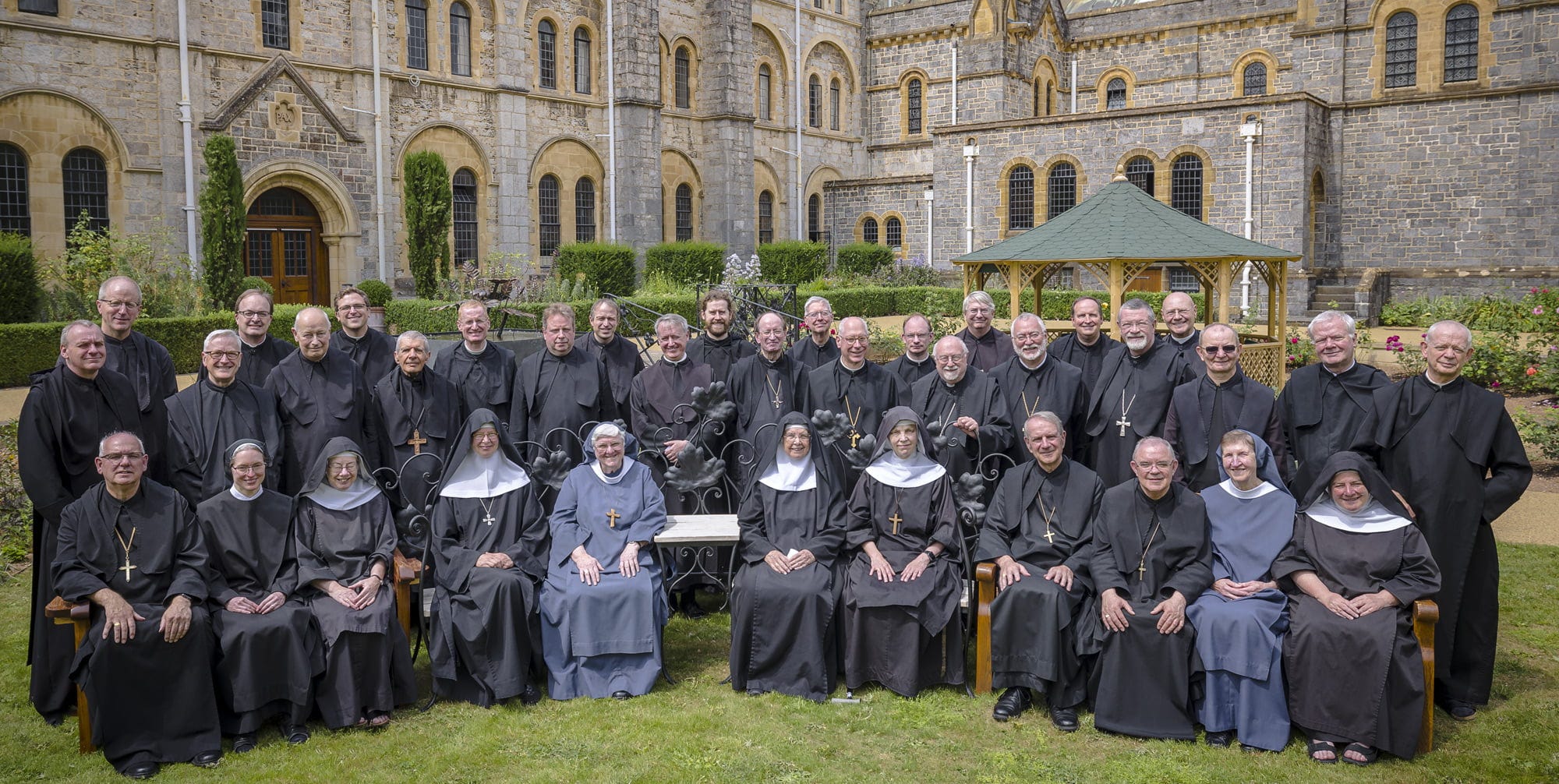
Additionally, the connection to monastic houses has been lost by such a rapid population boom.
A century ago, pretty much all hospitals, schools, and universities were in some way connected to, or birthed out of monasteries or churches. But today, most aren’t. This isn’t because they don’t exist, it’s simply the practicalities of rapidly needing to expand social services to meet the requirements of a larger population at a time when secular authorities provide the welfare state once run by the Church. Sadly, that means that many people are disconnected from the history that would otherwise surround them.
I have had the privilege of attend one of the world’s oldest universities, and teaching in two of the world’s oldest schools, and there is a feeling that you are stepping into something ancient and hallowed that you just don’t get from modern institutions. Those places have a connection to centuries of tradition, and you can sometimes feel it in the grounds, buildings, culture, and ethos of those places. They give their stakeholders an opportunity to buy into something so much grander and older than themselves.
But if you are in a modern concrete ex-polytechnic, or new comprehensive built in 2015 to meet expansion requirements, you do not get that same opportunity to buy into the lasting legacy of those monasteries – particularly when many ex-monastic schools are fee-paying, and not everyone goes to university (let alone an old one).
We have detached ourselves from what was once the fertile ground that grew the intellectual, moral, and cultural flower of England – and in the process, we are changed.
We live in a civilisation that was once shaped by monasteries, even if we no longer recognise that.
If we wish to reclaim the England that seems to be slipping away, re-acquainting ourselves with the importance of monasteries and with its thinkers, is a good step along that road.
When we forget or overlook something as foundational to our culture as its monasteries, I fear that we are forgetting what makes us who we are.
Monks did not rule this land, but without them, there would be no England.
What do you think?
Can a civilisation survive once it forgets the institutions that built it – or does something essential begin to unravel?
Let me know in the comments – I’ll reply to every response.
I look forward to hearing from you, and I hope you have a wonderful weekend.
Tom
If this helped you see England differently, share it with someone who cares about history, culture, or where our society is heading.
Image Credits:
Title Image – Abbey – https://www.english-heritage.org.uk/visit/inspire-me/travel-guides/top-abbeys/
Medieval battle – https://www.thecollector.com/greatest-medieval-battles-sieges/
Medieval Westminster Abbey – https://uk.pinterest.com/pin/588142032573269025/
Lindisfarne Gospels – https://www.worldhistory.org/image/8044/lindisfarne-gospels/
Bishop – https://uk.pinterest.com/pin/424605071121115946/
Benedictine monks – https://www.benedictines.org.uk/our_houses_douai_abbey/