

Part of the Origins of Britain series (Stone Age → 1066)
For centuries there was no England, only rival kings, burning villages, and shifting borders.
Mercia fought Northumbria; Wessex fought Mercia; pagan raiders struck from the sea while Christian monks prayed for survival.
Yet a crisis within this fractured and violent world made a single kingdom emerge victorious, and with it, the first idea of England.
Hello,
And welcome back to The Case For More. As I explained in my last newsletter, I have taken some time away from Substack to work out what to do after being made redundant. Despite that issue remaining unresolved, we are back and carrying on with where we left off.
Last History Wednesday article was a brief history of each of the seven kingdoms (Heptarchy) of England during the Anglo-Saxon period. And this week we are going to see how these went from seven divided kingdoms into one England.
The Heptarchy
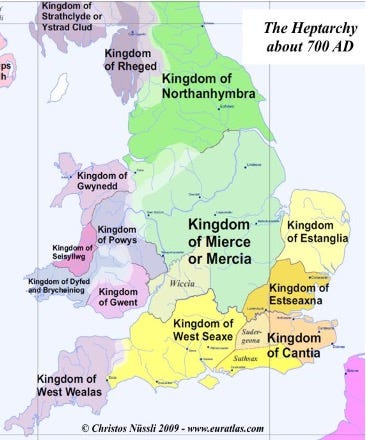
It is worth reminding ourselves at the start that the Heptarchy was not a stable political unit. Although there were times when a Bretwalda overlorded all the other kingdoms, rivalries were deeply held and fiercely fought over.
The borders of each kingdom changed drastically over the centuries, and smaller kingdoms became puppet states of their neighbours, or were subsumed altogether.
If you were an Anglo-Saxon peasant living on one of those borders, life was tense. The threat of a horde of soldiers raiding into your village and killing your loved ones was an ever-present reality.
Although the Heptarchy had within it the seeds of England, it was not yet England, and the formation of such a country was not guaranteed.
Or was it? What do you think? Was it inevitable that the kingdoms of England would unite? Let me know below in the comments.
Why unity was difficult
Initially, the kingdoms were divided among racial/cultural lines. Some kingdoms were Saxon, others were Angles or Jutes, and whilst after a few generations the importance of this diminished, kings still traced their authority and lineage back to those first invaders.
Furthermore, whilst paganism had mostly disappeared and the kingdoms were united by Christianity, there were still patches or outbursts of return to paganism and syncretism well into the eighth century. And in some places, these church systems, although united by Rome, operated independently of one another.
Finally, each kingdom had its own laws, traditions, and histories. It can be hard to imagine today as they all seem fairly similar to us, but many people (at least in nobility) were patriotic about their kingdoms and were willing to fight and die for them.
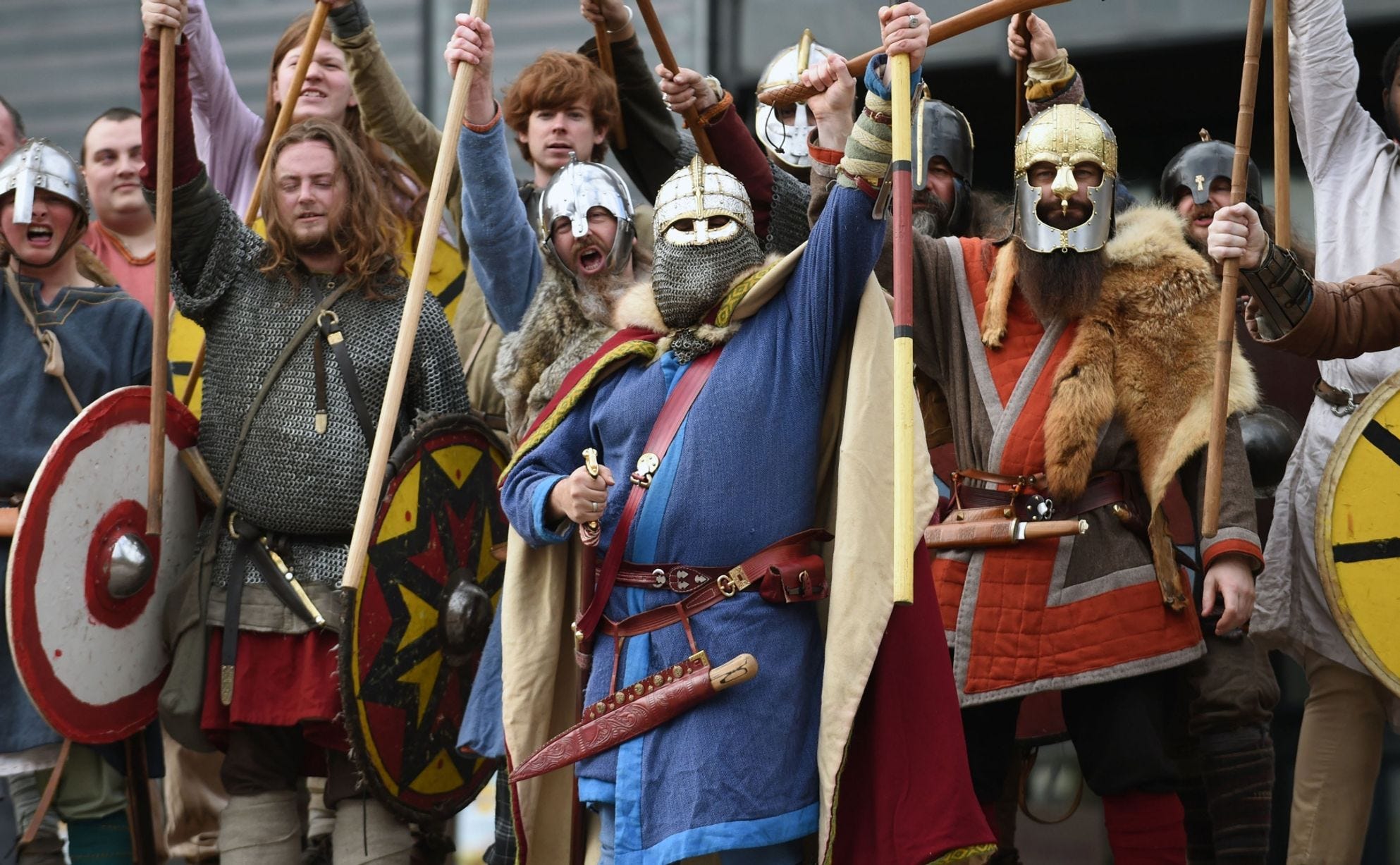
For a long time, Mercia was the dominant kingdom, and a kingdom like Wessex was very much in its shadow. In the north, Northumbria was undergoing something of a monastic golden age of learning and scholarship that set it apart from the others. Meanwhile a kingdom like Kent was continental facing, less troubled by the warring of its neighbours.
At this time, kingdoms looked after themselves and fought for dominance. Nobody was trying to create an ‘England’, they were just trying to come out on top. Other than amongst a few writers such as Bede, the idea that the Anglo-Saxons were/could be one people called ‘English’ was as yet unthought of.
The Nordic shift
So why did that change?
We will talk about this in more detail next newsletter, but the Viking raid on Lindisfarne changed everything.
On June 8th 793 a small Viking raiding party from Scandinavia arrived on the island monastery of Lindisfarne, sacking it, killing its monks, and burning its buildings. This small attack on the heartland of northern Christianity represented something much bigger – the time of the Vikings had arrived.
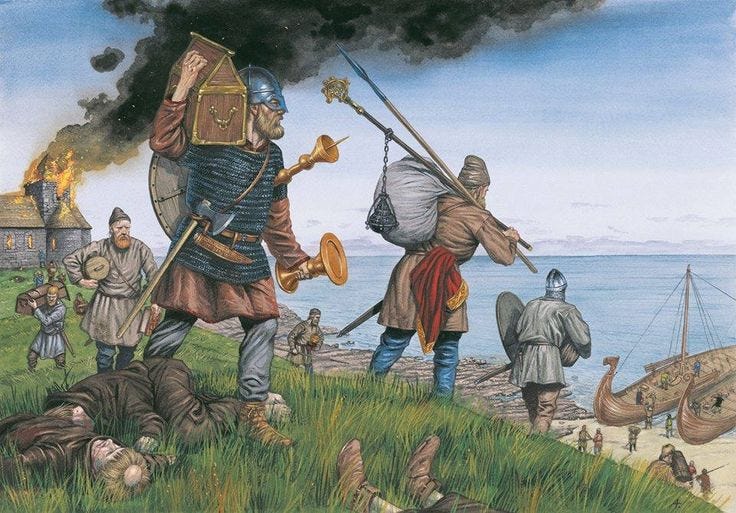
Over the next century or so the Vikings began to make headway into England, particularly with the arrival of the Great Heathen army in 865. In time, the Vikings took vast parts of Northumbria, making the ancient city of Eboracum their capital and renaming it Jorvik (York).
They established the Danelaw, a Viking kingdom on English soil, under its own laws, rituals, and governance. In East Anglia, the river ways allowed them to penetrate deeply into the kingdom, and it’s capital of Thetford fell shortly after the Great Heathen army’s arrival.
A unifying enemy
It is well known in psychology and warfare that a potent enemy has the power to unite where there is division, and the Vikings certainly were a potent enemy.
With the threat in the north and the east growing by the day, and more Vikings arriving and settling on English soil, what remained of the diminished heptarchy had to put aside its difference and unite to face this foe. After centuries of dynastic fighting, there was now something bigger to fight for.
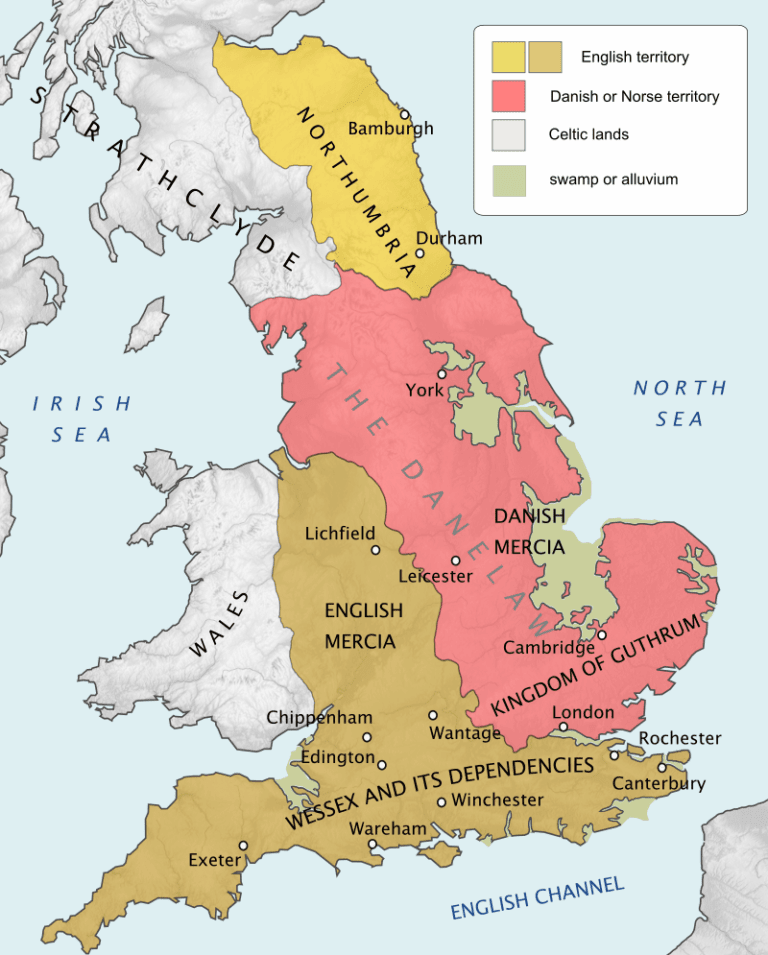
This is a very simplified version of what happened, and there were still many divisions and squabbles along the way, but the Viking threat did work to eventually unite the Christian Anglo-Saxon kingdoms against its pagan foe in war for God and the very existence of England.
But once again, even now, the vision of England was not a given. The Vikings could have been successful. Today, we could be speaking a variant of Scandinavian and have closer ties with the Nordic countries rather France and Germany – indeed, many places in the north of England still bear the names and town of the Danelaw.
What can men do against such reckless hate?
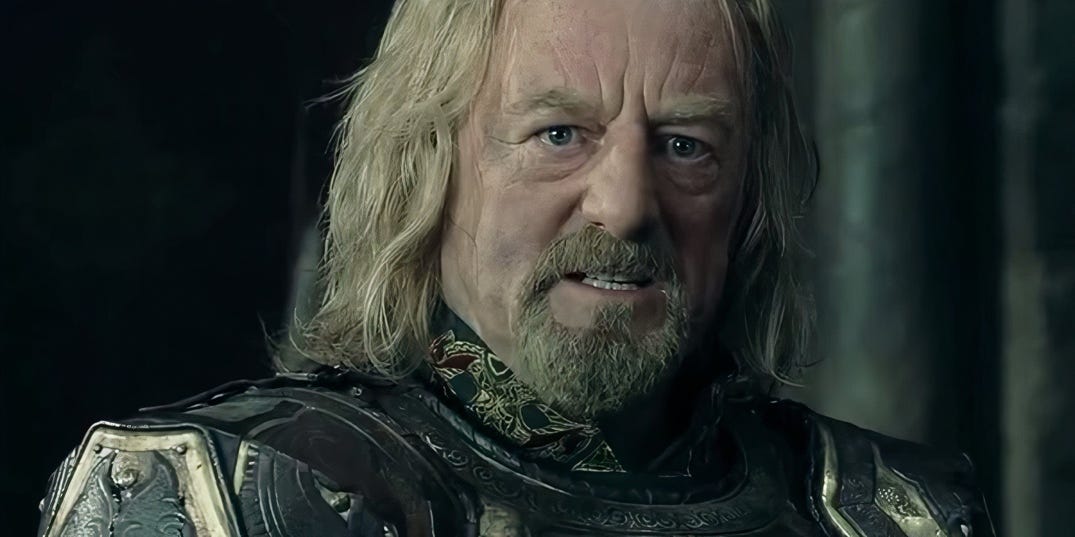
To use a quote from King Theoden in LOTR, fear at the Viking’s seemingly ‘reckless hate’ is truly how the Anglo-Saxons felt towards their new neighbours.
There was no shortage of brutality amongst the Anglo-Saxons, but the pagan ways, rumours of human sacrifice, and worship of war amongst the Vikings made them a terrifying force. Their belief in a warrior’s death earning them a place in Valhalla made them particularly ferocious warriors and fighting them must have been a horrifying experience.
But Wessex answered the call, and with it, one of the most important figures in English history.
As I say, we will break this down in more detail over the next few newsletters (this newsletter is just giving a broad overview to set the stage), but in Wessex the idea of England had begun to form.
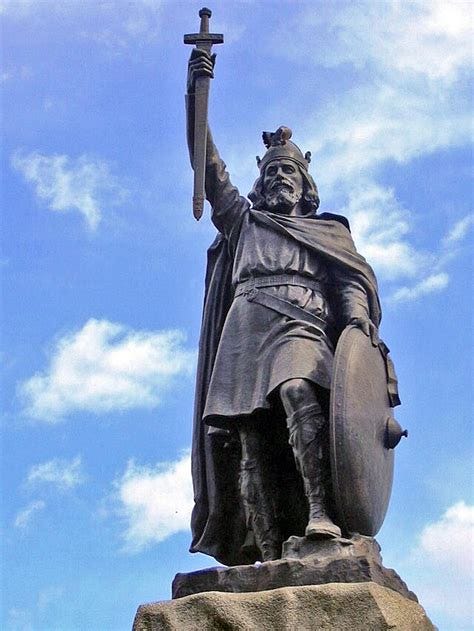
And at the centre of that story stands one man – Alfred of Wessex.
Alfred had a big dream of an England united into one kingdom, stretching up to Scotland and to the sea in the east, that could push back the Vikings once and for all – and maybe even Christianise them in the process.
Although Alfred would not fully realise his dream, his son Athelstan would go on to be the first king of England.
Next week we will go back and break down some of these aspects in more detail starting with the Viking raid on Lindisfarne and what it meant to the people of Northumbria before moving onto the Great Heathen army, the Danelaw, and the dominance of Wessex.
As ever, if you have enjoyed this today, why not share it with someone you know is interested in history? You can do that here.
Have a great week.
Tom
Image Credits:
Title Image – Vikings – https://archaeology.org/issues/march-april-2018/features/viking-great-army/
Anglo-Saxon reenactors – https://www.birminghammail.co.uk/news/midlands-news/gallery/anglo-saxon-warriors-launch-new-7955105
The sack of Lindisfarne – https://larryvienneauprints.blogspot.com/2018/06/the-raven-and-viking-raid-on-lindisfarne.html
The Danelaw – https://schoolhistory.co.uk/ancient-world/the-danelaw/
Theoden – https://screenrant.com/lord-of-the-rings-what-your-favorite-character-says-about-you/
Alfred the Great – https://en.wikipedia.org/wiki/Cultural_depictions_of_Alfred_the_Great